On Wednesday, June 15, 2022 FOMC Chairman Jerome Powell gave his scheduled June 2022 FOMC Press Conference. (link of video and related materials)
Below are Jerome Powell’s comments I found most notable – although I don’t necessarily agree with them – in the order they appear in the transcript. These comments are excerpted from the “Transcript of Chairman Powell’s Press Conference“ (preliminary)(pdf) of June 15, 2022, with the accompanying “FOMC Statement” and “Summary of Economic Projections” dated June 15, 2022.
Excerpts from Chairman Powell’s opening comments:
From the standpoint of our Congressional mandate to promote maximum employment and price stability, the current picture is plain to see: The labor market is extremely tight, and inflation is much too high. Against this backdrop, today the Federal Open Market Committee raised its policy interest rate by 3/4 percentage point and anticipates that ongoing increases in the that rate will be appropriate. In addition, we are continuing the process of significantly reducing the size of our balance sheet. I will have more to say about today’s monetary policy actions after briefly reviewing economic developments.
also:
Over coming months, we will be looking for compelling evidence that inflation is moving down, consistent with inflation returning to 2 percent. We anticipate that ongoing rate increases will be appropriate; the pace of those changes will continue to depend on the incoming data and the evolving outlook for the economy. Clearly, today’s 75 basis point increase is an unusually large one, and I do not expect moves of this size to be common. From the perspective of today, either a 50 or 75 basis point increase seems most likely at our next meeting. We will, however, make our decisions meeting by meeting, and we will continue to communicate our thinking as clearly as we can. Our overarching focus is using our tools to bring inflation back down to our 2 percent goal and to keep longer-term inflation expectations well anchored.
Excerpts of Jerome Powell’s responses as indicated to various questions:
JEANNA SMIALEK. Thanks for taking our questions. Jeanna Smialek with the New York Times. You, I guess I wonder if you could describe for us a little bit how you’re deciding how aggressive you need to be. So obviously 75 today, what did 75 achieve that 50 wouldn’t have and why not just go for a full percentage point at some point?
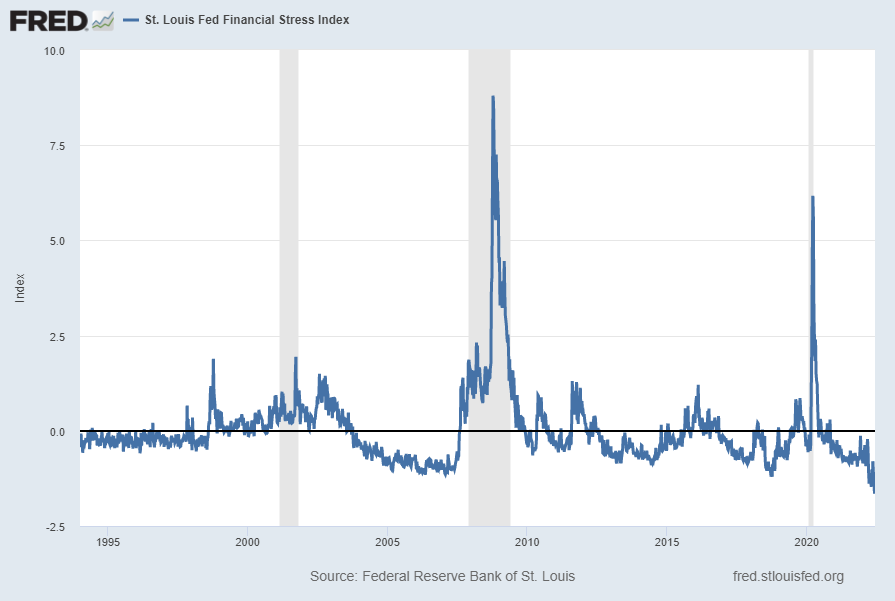
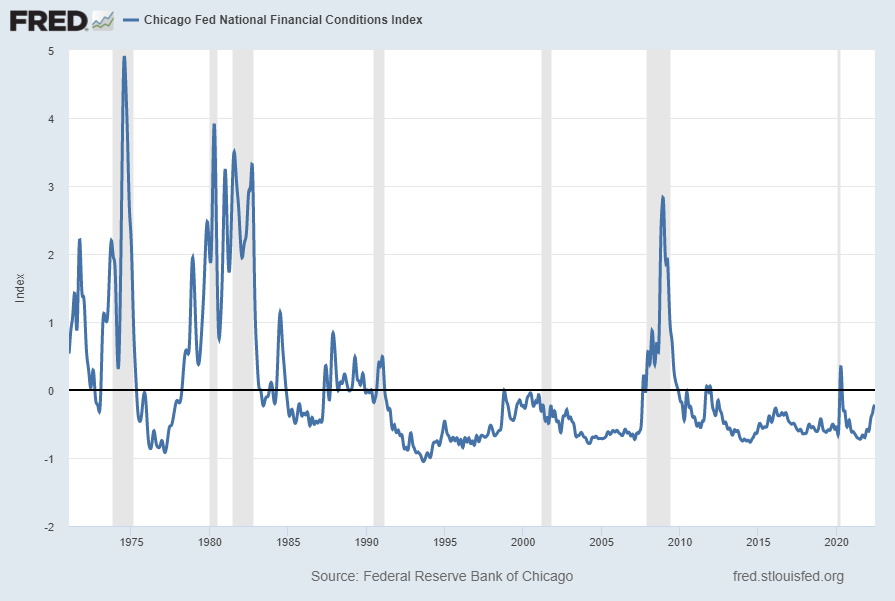
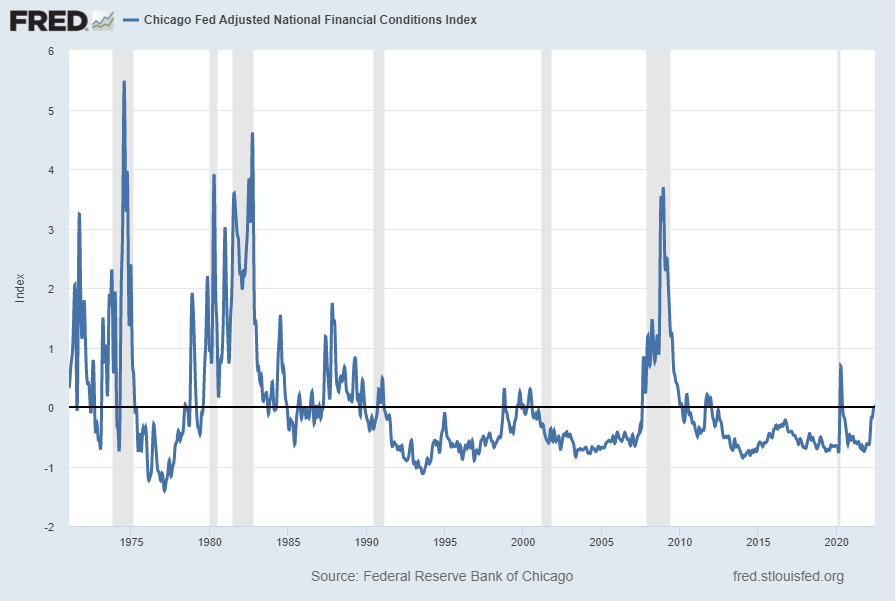
CHAIR POWELL. Sure. So if you take a step back, what we’re looking for is compelling evidence that inflationary pressures are abating and that inflation is moving back down and we’d like to see that in the form of a series of declining monthly inflation ratings, that’s what we’re looking for. And by this point, we had actually been expecting to see clear signs of at least inflation flattening out and ideally beginning to decline. We’ve said that we’d be data dependent, focused on incoming data, highly attentive to inflation risks, the things that I mentioned to Howard moments ago. So, contrary to expectations, inflation again surprised to the upside, indicators, some indicators of inflation expectations have risen, and projections of this year have moved up notably. So, we thought that strong action was warranted at this meeting and today we delivered that in the form of a 75 basis point rate hike as I mentioned. So, what was the point of it really is this, we’ve been moving rates up expeditiously to more normal levels and over the course of the seven months since we pivoted and began moving in this direction, we’ve seen financial conditions tighten, and appropriately so. But the federal funds rate, even after this move, is at 1.6 percent. So, again the Committee is moving rates up expeditiously to more normal levels and we came to the view that we’d like to do a little more front-end loading on that. So I think that the SEP gives you the levels that people think are appropriate at given points in time. This was really about the speed in which we would get there. So as I mentioned, 75 basis points today, I said the next meeting could well be about a decision between 50 and 75, that would put us at the end of July meeting, in that range, in that more normal range and that’s a desirable place to be because you begin to have more optionality there about the speed with which you would proceed going forward. Just talking about the SEP for a second; what it really says is that Committee participants widely would like to see policy at a modestly restricted, restrictive level at the end of this year, and that’s six months from now and so much data and so much can happen. So remember how highly uncertain this is, but so that is generally a range of 3 to 3 and 1/2 percent. That’s where people and that’s what they want to see. Knowing what they know now and understanding that we need to be, we need to show result but also be flexible to incoming data as we see it. If things are better, we don’t need to do that much, so, and if they’re not then we either do that much or possibly even more. But in any case, it will be very data dependent. Then you’re looking at next year and what you’re seeing is people see more, a bit more tightening and a range of maybe 3 and 1/2 to 4 percent. And that’s generally what people see as the appropriate path for getting inflation under control and starting back down and getting back down to 2 percent. So, 75 basis points seemed like the right thing to do at this meeting and that’s what we did.
STEVE LIESMAN. Steve Liesman, CNBC, thank you for taking my question, Mr. Chairman. You have not used the phrase in a long time, monetary policy is in a good place, which is a phrase that you used to use often. Now that the Committee is projecting 4 percent on a, or 3.8 percent next year in terms of the funds rate, which is similar to where the market is now, the futures market of 4 percent funds rate next year, do you think that’s a level that is going to be sufficiently high enough to deal with and bring down the inflation problem? And just as a follow-up, could you break that apart for me? How much of that is restrictive and how much of that restrictive and how much of that is a normal positive rate that ought to be imbedded or not in your opinion, in the funds rate? Thank you.
CHAIR POWELL. Sure, to the question really is; how high does the rate really need to go? And this is, the estimates on the Committee are in that range of 3 and 1/2 to 4 percent. And how do you think about that? Well, you can think about the longer run neutral rate, you can compare it to that and we think that’s in the mid-2’s, you can look frankly at broader financial conditions. You can look at asset prices, you can look at the effect they’re having on the economy, rates, asset prices, credit spreads, all of those things go into that. You can also look at the yield curve and ask all along the yield curve, where is the policy rate? So, for much of the yield curve now, real rates are positive. That’s not true at the short end, at the short end of the yield curve in the early years, you don’t have real, you have negative rates still. So that really is one data point, that’s one part of financial conditions. So I think, I have to look at it this way; we move the policy rate that affects financial conditions, and that affects the economy. We have of course, ways, rigorous ways to think about it, but ultimately it comes down to do we think financial conditions are in a place where they’re having the desired effect on the economy? And that desired affect is we’d like to see demand moderating. Demand is very hot still in the economy, we’d like to see the labor market getting better in balance between supply and demand. And that can happen both from supply and demand. Right now, there’s demand is substantially higher than available supply though, so we feel that there’s a role for us in moderating demand. Those are the things we can affect with our policy tools. There are many things we can’t affect, and those would be – you know, the things, the commodity price issues that we’re having around the world due to the war in Ukraine and the fallout from that, and also just all of the supply side things that are still pushing upward on inflation. So that’s really how I think, how I think about it.
STEVE LIESMAN. But does 3.8 percent, 4 percent, get it done? Does it get the job done on the back of inflation?
CHAIR POWELL. I think it’s certainly in the range of plausible numbers. I think we’ll know when we get there really, I mean honestly though, that would be, you would have positive real rates I think and inflation coming down by then, I think you’d have positive real rates across the curve, I think that the neutral rate is pretty low these days. So, I would think it would, but you know what, we’re going to find that out empirically, we’re not going to be completely model driven about this, we’re going to be looking at this, keeping our eyes open and reacting to incoming data both on financial conditions and on what’s happening in the economy.
NICK TIMIRAOS. Thanks, Nick Timiraos. Chair Powell, you’ve said that you like your policy to work through expectations and now obviously this decision was something quite different from how you and almost all of your colleagues had set those expectations during the intermeeting period. And I know you just said that what changed was really the inflation data, the inflation expectations data, but I’m wondering on the inflation expectations data, was there something you saw that was unsettling enough to risk eroding the credibility of your verbal guidance by doing something so different from what you had socialized before?
CHAIR POWELL. So, if you look at a broad range of inflation expectations, so you’ve got the public, you’ve got surveys of the public and of experts and you’ve also got market based. And I think if you look across that broad range of data, what you see is that expectations are still in the place, very much in the place, where short-term inflation is going to be high, but comes down sharply over the next couple of years. And that’s really where inflation expectations are and also, as you get away from this episode, they get back down close to 2 percent. And so, this is really very important to us that that remain the case. And I think if you look for most measures, most of the time, that’s what you see. If we even see a couple of indicators that bring that into question, we take that very seriously. We do not take this for granted, we take it very seriously. So the preliminary Michigan reading, it’s a preliminary reading, it might be revised, nonetheless it was quite eye catching and we noticed that. We also noticed that the Index of Common Inflation Expectations at the Board has moved up after being pretty flat for a long time, so we’re watching that and we’re thinking this is something we need to take seriously. And that is one of the factors as I mentioned. One of the factors in our deciding to move ahead with 75 basis points today was what we saw in inflation expectations. We’re absolutely determined to keep them anchored at 2 percent. That was one of the reasons, the other was just the CPI rating.
also:
EDWARD LAWRENCE. Thanks Chair Powell. Edward Lawrence with FOX Business. I want to, you talked about CPI going to 8.6 percent, the retail sales surprised the market by falling and then revisions to the previous months were down. Are you hearing from contacts about consumers slowing spending or changing their habits?
CHAIR POWELL. So we’re of course watching very, very carefully for that, and looking at the retail, the big store numbers and all this kind of thing and so I, but I think the fair summary of what we see is you see continuing shifts in consumption, you see some things getting, sales going down, but overall spending is very strong. The consumer’s in really good shape financial, they’re spending. There’s no sign of a broader slowdown that I can see in the economy. People are talking about it a lot, consumer confidence is very low. That’s probably related to gas prices and also just stock prices to some extent for other people. But that’s what we’re seeing. We’re not seeing a broad slowdown. We see job growth slowing but it’s still at quite robust levels. We see the economy slowing a bit but still growth levels, at healthy growth levels.
_____
_____
The Special Note summarizes my overall thoughts about our economic situation
SPX at 3678.58 as this post is written